Television,lifted.
The most advanced 30 seconds on television. Videolift turns the spot you already have into something the living room can act on: configure it, price it, book it, without leaving the story. Every demo below is a real render from our platform.
Made for the biggest screen in the house.
Ten feet away, remote in hand. Every format is engineered for the living room: type you can read from the sofa, codes tuned for couch distance, and an interactive layer that goes live on players that allow it.
One tag.
Four layers.
Every Videolift ad ships as one standard ad tag that carries its own interactivity, and its own safety net. Nothing to install, nothing for the player to break.
 0401
0401Runs on the remote.
On players that speak the standard, the layer is live on the glass. The arrows move the focus, OK acts: build it, price it, book it, from the sofa, on the remote the viewer already holds. No app to install on the television, no phone to pair.
And where a player has no live overlay at all, the exact same file keeps working: the action layer stays baked into the pixels, the offer stays priced from the product feed, the code on the glass still closes the loop. One tag, any platform, fail proof.
The machinery. Quietly doing the lifting.
Feeds in, signals out, a plan for every player, and a conformance pass that clears your master for any platform before a single impression serves. The parts you never see are the reason it never breaks.
Your catalogue, live.
Your ecommerce product feed drops in as-is. The platform ingests it, maps every SKU to the creative, and renders an ad variation per product, per format. A row changes in the sheet, the platform re-renders every ad carrying it, and the same tag serves the fresh cut. No re-traffic, no creative round-trip.
Counts with all counters.
The whole funnel, fired as the spot plays: ad start, completion, scan, conversion. Every event lands where you already look. The scan reports to your ad server as the click, and the conversion closes the loop. And with several product variants live at once, every number reads per creative: A/B testing comes built in, and optimization follows the evidence.
Never a broken ad.
Every player gets the deepest tier it can carry: the live overlay, the baked code, or the sealed fallback cut. Per impression, automatically.
Any creative. Every platform.
The validator reads your master against the spec of each destination (AVOD platform, ad server, FAST channel, DSP, broadcaster), and the transcoder re-cuts whatever misses: resolution, frame rate, loudness, container. One master in, every rendition out, cleared everywhere it will ever play.
Yes, AI. In, and in behind.
No chat window on top, no sparkle in the corner. The intelligence here is visible work: neural where it helps, deterministic where it must be. Built into the render pipeline rather than bolted on top. And it never invents a product, a price, or a claim.
It watches the film like a viewer.
Sees where the viewer looks, and where the product is. Placement scores every corner against the subject in every frame of the code’s window, not one sample. The box on the film is the tracker’s actual output, drawn live.
The card waits for the story to breathe.
Shot boundaries and a speech model pick where the transition starts, so the ad is never cut short: the latest scene change that leaves room, never mid-sentence. When no clean point exists it says so in the render notes, and the VO carries over the card.
Drop in a broken master. Leave with a broadcast one.
Legacy archives, agency hand-me-downs, the spot that only survives as a soft, off-spec file: the platform reads what is wrong and repairs it. Three neural repairs, one click each, and every output re-validates through the same 27 delivery checks before it ships.
 SD archiveNeural master
Master any legacy spot to spec.
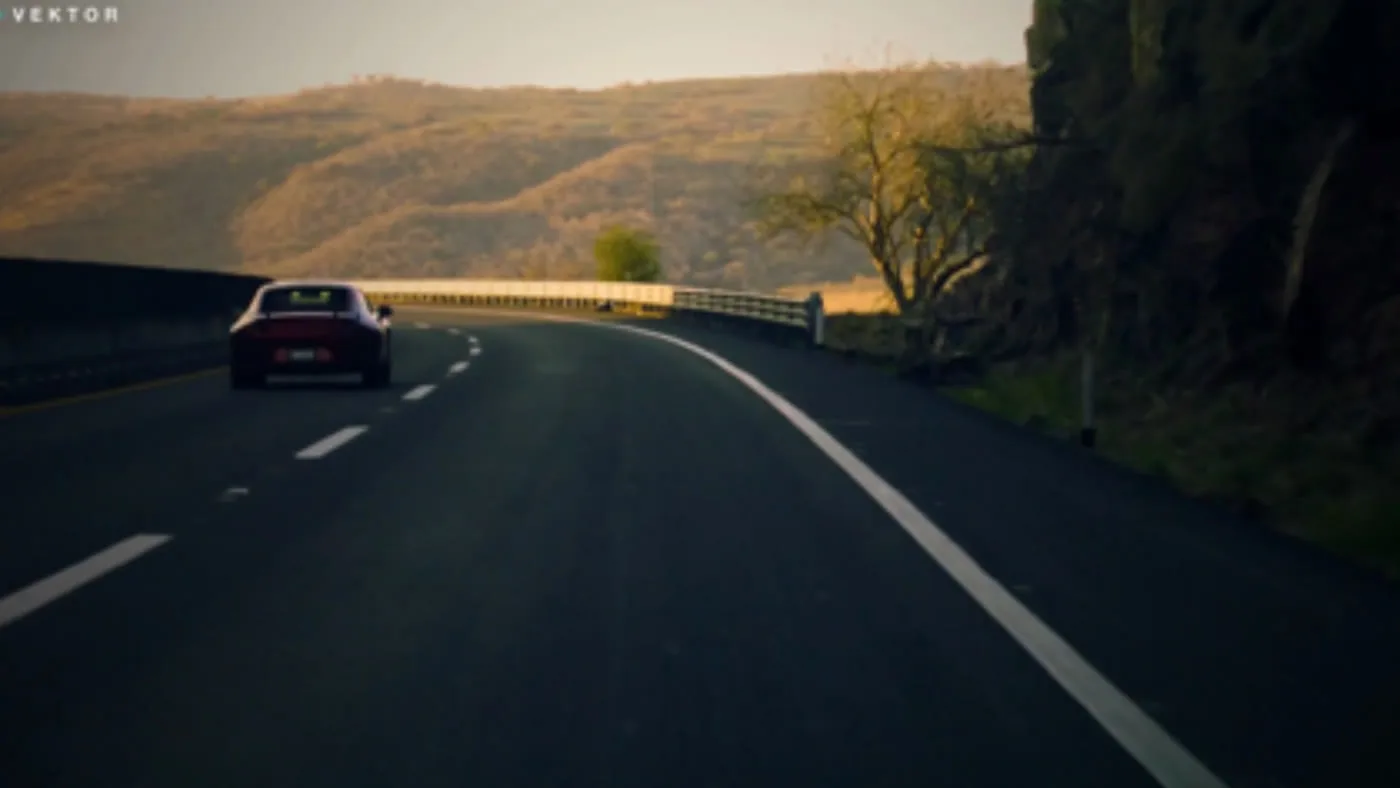
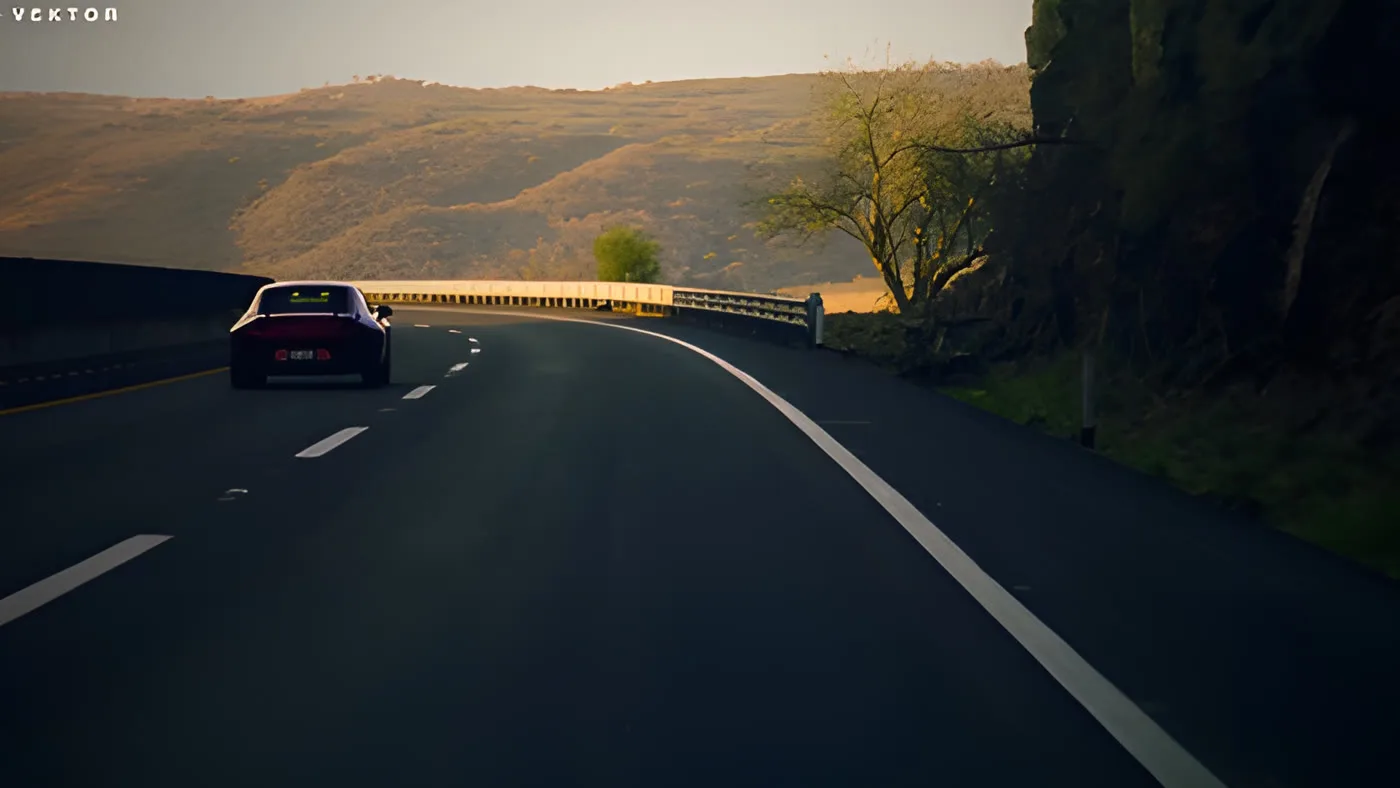
SD and 720p archives become 1080p+ CTV masters through neural super-resolution, in minutes per spot. The right side of this frame is the platform’s actual output: watch the guardrail, the hillside, the lane markings. The result re-validates automatically; when a source is beyond honest rescue, the rail says so instead of shipping softness.
One master. Every market.
The spot is built once. The platform gives it a voice, subtitles and a compliance pack for every market it will ever play in.
Every word, on paper, in seconds.
Whisper-class transcription runs inside the platform and detects the language on its own, ninety-nine of them. Press play: the voice is our generated VEKTOR demo, and the words that appear are the platform’s own transcript of it, word for word.
Out come broadcast .srt captions and the plain-text spoken-claims transcript compliance teams ask for by name.
Demo voiceover is AI-generated. A thirty-second spot transcribes in about ten seconds.
Burned in, styled, title-safe, and editable to the word.
Timed transcription becomes a subtitle pass a human can edit word by word. The burn-in lands inside CTV title-safe margins, and the master re-validates before it ships.
A voice for every market, in seconds.
Generated studio voice across the world’s major ad markets. Tap a language: every voice is the platform’s own render, generated from one script in seconds.
Demo voiceover is AI-generated.
Any master into an English compliance pack, in minutes.
The speech and every piece of on-screen text, including the small print the platform already reads, translate to English for platform and regulator approval. The same editable pass carries the subtitles into any language you sell in.
Videolift learns from every delivered campaign: its recommendations sharpen with use, and what it learns never leaves the platform.
The spot used to end at the ad break. On Connected TV, that is where it can start.
One brand. Seven picks from the almost endless format library. Every frame below left our renderer exactly as you see it.
The film keeps rolling. The offer builds around it.
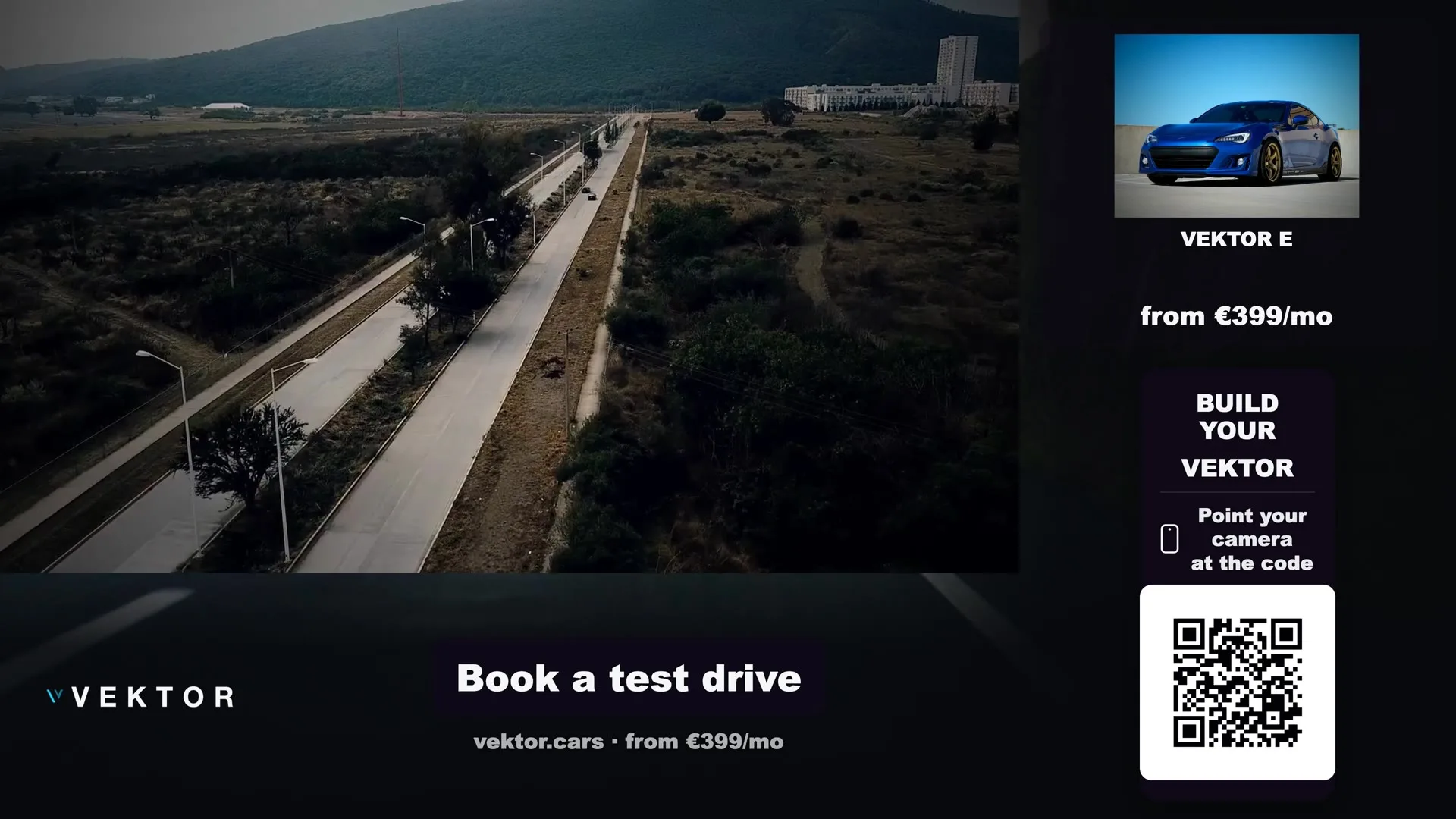
The spot squeezes back and the frame goes to work: each model card with its own monthly rate, and the code that books the test drive. Nothing covered, nothing cut.
Configure it from the sofa.
A full-height rail holds the car, the price and the code while the film plays on. One scan opens the exact build on the phone.
Attention was never the shortage. The dead end was.
The last five seconds, working.
The spot closes on a full-frame card: the brand, the code, the action. The seconds every ad wastes become the seconds that convert.
The pause is the poster.
The viewer pauses, the frame settles, and the offer takes the stage: product, price and code, holding until play. Seconds nobody was selling, working.
Shot for the thumb. Lifted for the living room.
Reels, Stories, TikTok, Shorts: the vertical work you already have, retold at ten feet. Three formats built for it.
Your story, center stage.
The film dims and a story-sized card takes the frame: headline, offer, code. The same hook you post, impossible to miss at ten feet.
The lineup, in the break.
Three models slide through the frame with live pricing while the short plays on. The swipe, translated to television. The code in the corner books whichever one stops them.
The TV’s front page. Videolift builds for it.
The home screens of the major TV makers sell the most premium placement on the glass: a full-bleed film under the platform’s own interface. Videolift builds that creative: the film adapted to each OEM’s layout, the text in the visible window, and the full-page end card behind the click, cleared by the validator before trafficking.
It plays itself: the spot runs under the interface, the CTA presses, the end card holds. Click the CTA or press Enter to take over, Esc to come back.
Rendered demonstration of the live home-screen video formats offered by one of the top five TV operating systems. For copyright reasons every interface element, app and title shown is fictional. No platform assets, app marks or third-party content are used.
Every major TV OS draws its own interface over the film. The destination profiles carry each one’s geometry: what covers the video, what the platform renders, what must never be baked in.
The demo spot’s supers sat behind the app rows. They were rebuilt into the visible window from the brand’s own plates and verified mechanically.
The CTA opens a full-page branded end card with products, prices and a scannable code, generated from the same brand system as the spot.
Built like broadcast. Wired like the web. Tuned for the future of TV.
Every format above ships as one standard ad tag: a video ad with the interactive layer declared on top. It travels the pipes CTV already has, and it reports like a channel.
Standard VAST 4.2. Served either side.
Ships as a compliant video asset with the interactive layer declared in the tag. No vendor SDK to integrate, no player work, no special deal type. Serve it from our stack, or drop the tag into yours.
SIMID where supported. QR everywhere.
Where the player speaks the standard, the overlay goes live on the remote. Everywhere else, the baked QR carries the action. One creative, two depths.
Survives the stitch.
The action layer is burned into the pixels, so server-side ad insertion cannot strip it. Client-side setups get the same file, and the code reads on any screen.
Broadcast-safe by construction.
Every render is validated against the spec of the AVOD platform, ad server, FAST channel, DSP or broadcaster it ships to, and re-cut automatically when it misses. Loudness, frame rate, codec, container: cleared before it leaves the building.
Priced from your feed.
Cards, carousels and offers render straight from your product feed. Change the price or the lineup and the platform re-renders what carries it. Same tag, fresh numbers, no re-traffic.
Measured end to end.
Ad starts, completions, scans and conversions, campaign-tagged and attributable per creative. The ad break finally reports like a performance channel.
Thinking, in and behind.
Cutouts, attention maps, palettes, type, scoring and legibility run inside the render itself, where the creative is built. The gates that clear it stay deterministic: the same master, the same answer, every time.
Every frame knows where the product is.
Full-video subject tracking across entire campaigns powers placement that is clean in every frame, not most frames.
Whole libraries, repaired in bulk.
The same repair rail runs at fleet scale: point the platform at an archive and every master is validated, upscaled, retimed and re-delivered over the API, campaign by campaign.
From the sofa to the signature.
The spot ends, the code lands, and the build is on their phone before the next ad starts. No app, no typing, no friction.
Three moves. No new footage.
Drop in the spot you already have.
The 30 seconds your team already made and cleared. On arrival it runs the 27 delivery checks, and the repair rail fixes what fails. No re-shoot, no re-edit, no new master.
Pick the template.
Squeeze-back, rail, lower third, end card, or the whole set. Dressed in your brand, priced from your feed.
Broadcast-ready in minutes.
From the click to the delivered asset: a compliant video file, measured end to end, QR verified on screen. Minutes from build to break, not days.
Videolift is built and operated by Media eXperience, a Connected TV and ad tech specialist based in Belgrade and Budapest. The team runs premium Connected TV inventory for broadcasters, platforms and agencies across the region. The full company story lives at mediax.plus.
Lift your next campaign.
Drop in a spot. Leave with the most advanced version of it television can run.
The reel, gone prime time.
A vertical reel with its profile panel, straight from the feed into the break: handle, followers, likes, and the code that books the drive. It still reads social. It just got a bigger room.